Theo Beck · 28 September 2026
Bridging Divides: How Mentorship Networks Are Transforming Access to STEM in Poland's Smaller Communities
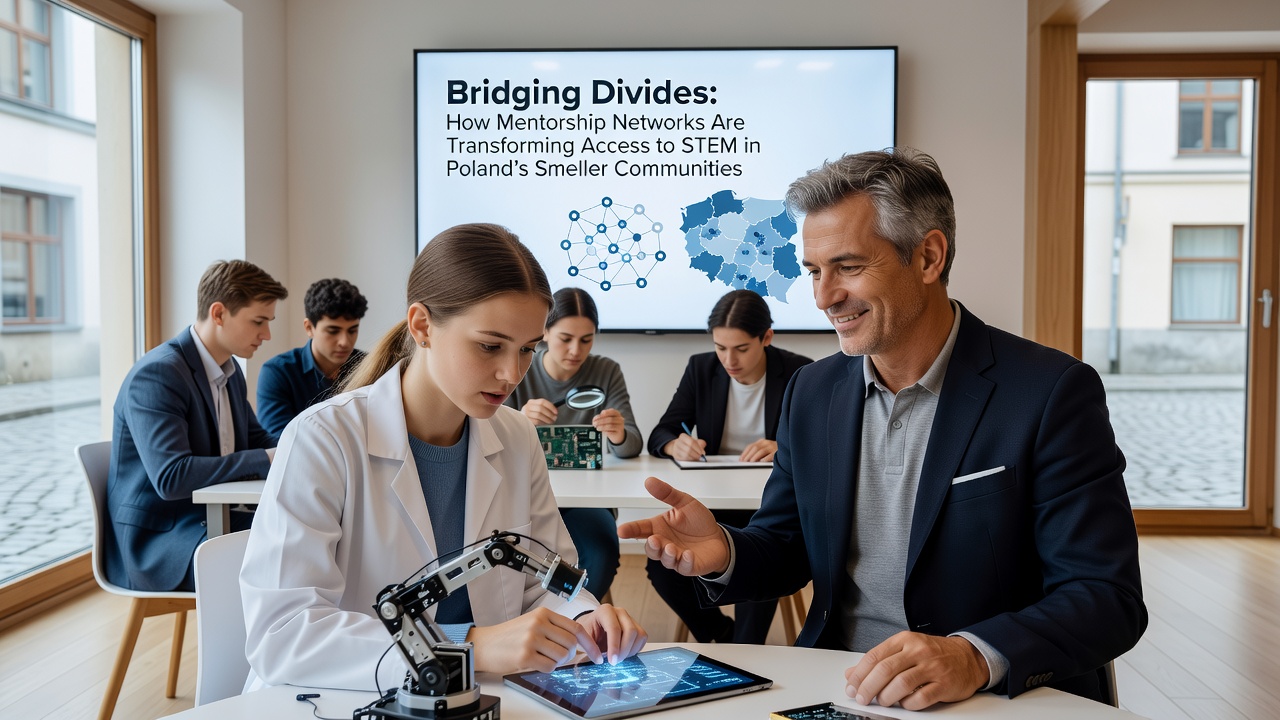
Poland's smaller communities have long faced uneven access to STEM resources, yet mentorship networks have begun to close those gaps through structured programs that connect rural students with professionals in science, technology, engineering, and mathematics. Data from national education surveys indicate that participation in these networks grew steadily between 2022 and 2025, with rural enrollment rising by 34 percent in targeted regions while urban centers maintained stable figures. Researchers at several Polish universities tracked these changes and found that consistent mentor interactions correlate with higher rates of advanced course completion in schools outside major cities like Warsaw and Krakow.
The Persistent Urban-Rural Divide in STEM Opportunities
Smaller towns and villages often lack specialized laboratories, advanced coding clubs, and industry partnerships that urban schools take for granted, yet government statistics show that students in these areas demonstrate comparable interest in STEM fields when given equivalent exposure. A 2024 report compiled by the Polish Ministry of Education revealed that only 28 percent of secondary schools in communities under 20,000 residents offered dedicated robotics or data science electives, whereas 71 percent of schools in cities above 100,000 provided such options. This disparity prompted several regional universities to launch pilot mentorship initiatives that pair local teachers with volunteer engineers and scientists working in larger hubs or abroad. Those programs expanded after initial pilots demonstrated measurable gains in student project submissions to national science competitions.
How Mentorship Networks Operate Across Distances
Modern networks rely on hybrid formats that combine monthly in-person visits with weekly virtual sessions, allowing mentors based in Gdansk or Poznan to guide students in places like Suwalki or Krosno without requiring relocation. Platforms developed by Polish technical universities handle scheduling and resource sharing, while participating companies contribute case studies drawn from real engineering challenges. Observers note that the structure emphasizes sustained relationships over one-off lectures, with pairs often continuing for two academic years. Evidence collected through pre- and post-program assessments shows improvements in both technical skills and confidence measures among participants from smaller communities.
Recent Expansions and the September 2026 Milestone
Building on earlier successes, a coalition of regional education authorities announced plans to scale mentorship coverage to 45 additional gminas by September 2026, coinciding with updated national curriculum standards that prioritize computational thinking. The timeline aligns with funding cycles from the European Social Fund, which allocated resources specifically for cross-community STEM linkages. Program coordinators report that recruitment for new mentor cohorts began in early 2025, and training modules now include modules on cultural adaptation for professionals entering rural school environments for the first time. Similar efforts in other European contexts have produced parallel results, according to European Commission education policy documents.
Documented Impacts on Student Pathways
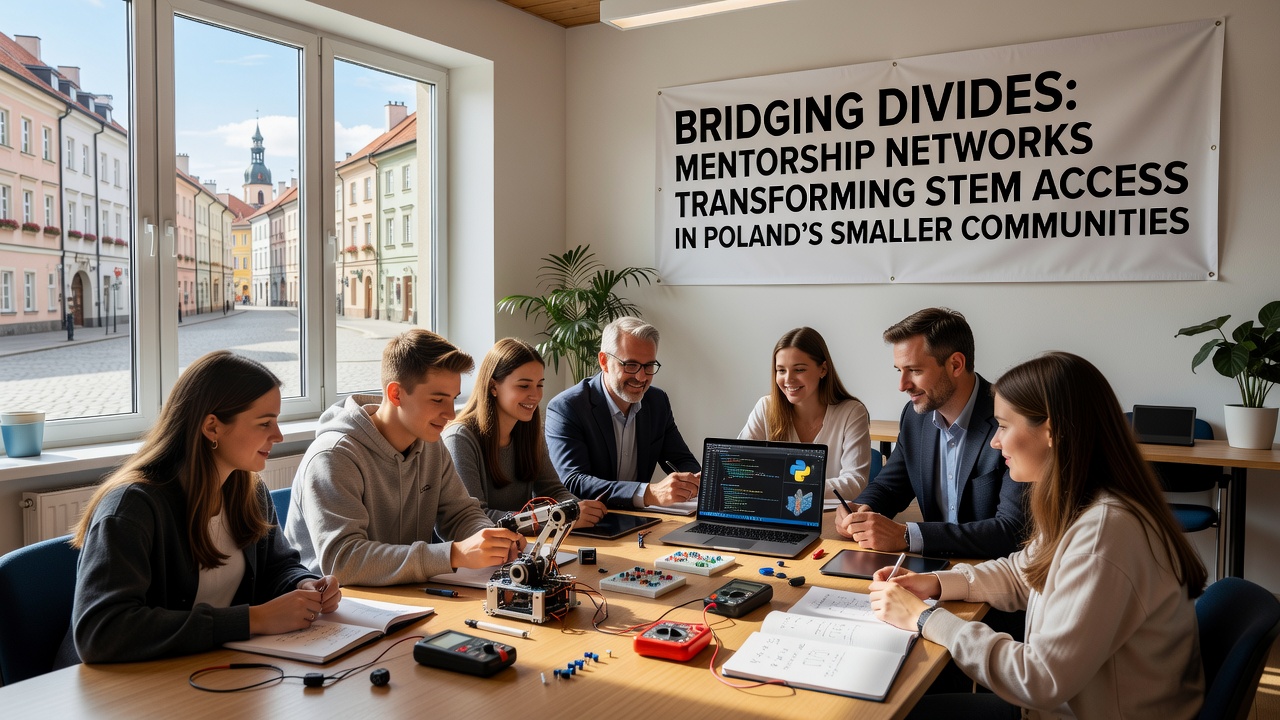
Longitudinal tracking conducted by independent research teams indicates that students who completed two-year mentorship cycles applied to STEM degree programs at rates 22 percent higher than matched peers without network access. Figures released in mid-2025 also show increased female participation in the rural cohorts, rising from 31 percent in 2023 to 47 percent in the most recent intake. These shifts occurred alongside broader policy changes that introduced mobile STEM labs funded through public-private partnerships. Analysts at the OECD have examined comparable regional programs and noted that sustained mentor contact tends to reduce dropout risk during the transition from secondary to tertiary education, as detailed in their 2025 education indicators publication.
Obstacles Encountered and Adjustments Made
Connectivity issues in some remote villages initially slowed virtual components, yet network operators responded by distributing offline resource kits and scheduling intensive weekend workshops during school holidays. Mentor retention presented another challenge when professionals faced competing work demands, leading several networks to introduce micro-credential recognition for participants who logged sufficient hours. Schools in the smallest communities sometimes struggled to free teacher time for coordination, prompting organizers to embed administrative support directly into the program budgets. These adaptations have allowed the networks to maintain momentum despite varying local conditions across Poland's diverse geography.
Conclusion
Mentorship networks continue to evolve as data accumulates on their effectiveness in Poland's smaller communities, with expansions scheduled through 2026 and beyond. The combination of virtual tools, targeted funding, and structured pairings has produced measurable shifts in enrollment patterns and skill acquisition. Ongoing evaluations will determine how these models adapt to new curriculum requirements and emerging technologies, yet current records already demonstrate that deliberate connections between professionals and rural students can narrow longstanding opportunity gaps in STEM fields.